

About
The presence of landmines and explosive ordnance in Western Sahara is a legacy of the conflict that took place between 1975 and 1991. Much of this contamination is concentrated along the 1,465-kilometer-long sand berm which divides the region. This berm and its surrounding areas remain heavily impacted by mines and cluster munitions, posing a continuous threat to local populations and humanitarian efforts. As the conflict remains ongoing at a low intensity, there is a persistent possibility of new, additional contamination being introduced to the environment.
Established following the 1991 ceasefire, the United Nations Mine Action Service (UNMAS) operates as a core component of the UN Mission for the Referendum in Western Sahara (MINURSO). Under the mandate of UN Security Council Resolution 2797 (2025), UNMAS ensures the safe movement of UN personnel and resupply of UN Team sites by mitigating explosive threats and upholding military demining agreements. By neutralizing these hazards, the program sustains MINURSO’s operations, promotes regional stability, and supports broader progress toward a peaceful resolution.
Following the breakdown of the ceasefire in November 2020, UNMAS demining operations were largely suspended, with only a small emergency response team remaining active East of the Berm. After extensive negotiations facilitated by MINURSO and UNMAS Headquarters, an agreement was reached with both the Royal Moroccan Army (RMA) and the Frente POLISARIO to resume vital clearance work. Operations officially restarted East of the Berm on 22 May 2023, followed by the resumption of activities in the southern part of the Territory in January 2024.
Impact
Since the establishment of the program in 2008, UNMAS Western Sahara has achieved the following outputs:
- Released approximately 150 million square meters of hazardous land, including 43 of 67 known minefields and 508 of 541 cluster munition strike areas.
- Verified more than 50,000 km of routes as safe for UN military observer patrols and humanitarian movement.
- Over 30,000 Mines & EO items were rendered safe
- Reached 80,000 local and nomadic people with life-saving Explosive Ordnance Risk Education, and 2,176 MINURSO personnel briefed on explosive hazards, ensuring they can operate safely and effectively in contaminated environments.
- Supported 48 survivors and 400 dependents, addressing the needs of a region where over 1,000 mine victims have been recorded East of the Berm
Activities
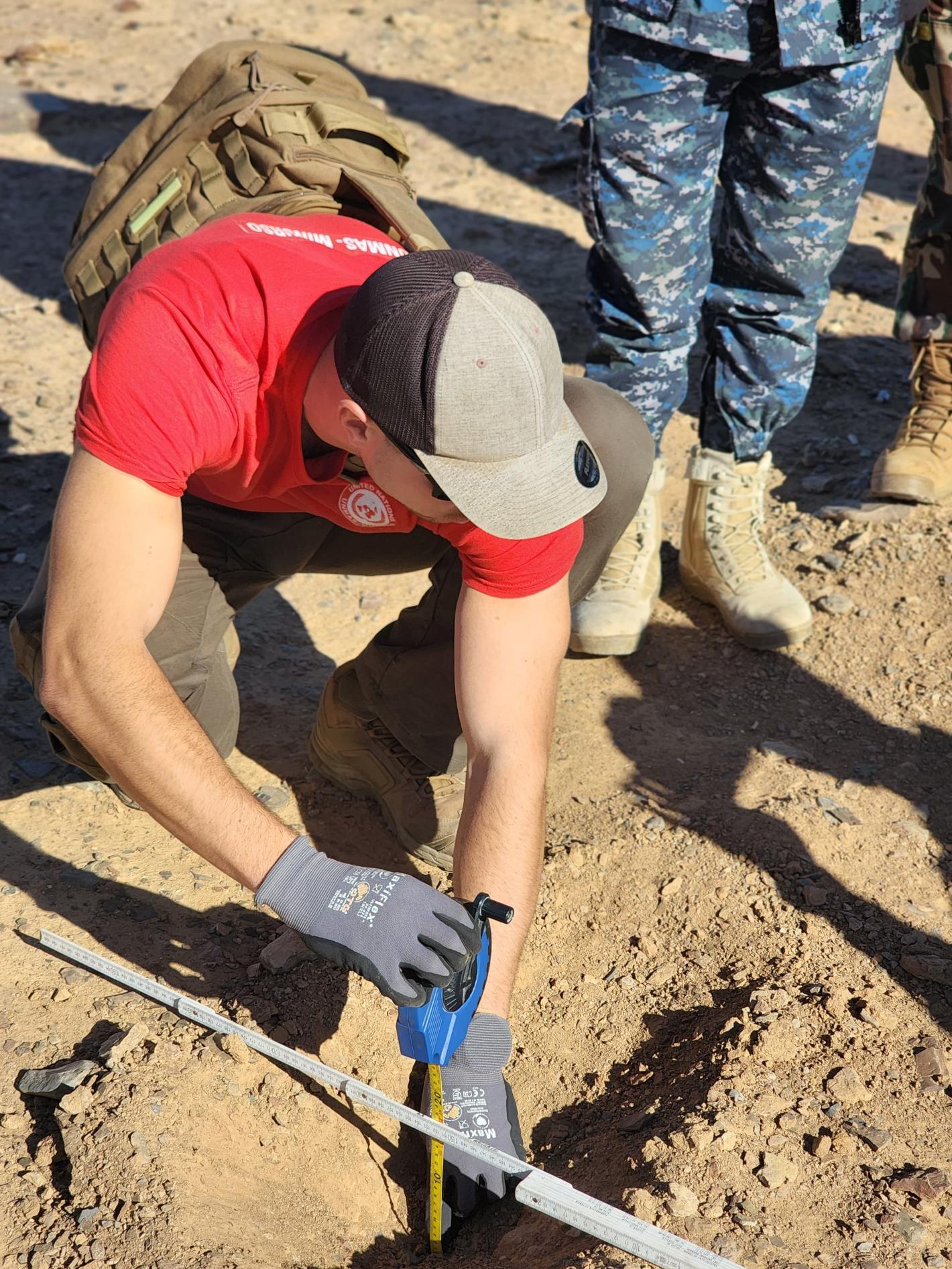
UNMAS is vital to the MINURSO mandate, ensuring safe passage for UN military observers, humanitarian workers, and local communities through the clearance of minefields and cluster munition strike areas. By verifying roads and ground supply routes, conducting non-technical and technical surveys and clearance operations, maintaining a 24/7 emergency response capacity to address any immediate landmine or Explosive Ordnance -related incidents and accidents, and providing essential explosive ordnance awareness training to UN personnel, UNMAS fosters environment for peacekeeping operations to conduct tasks in a safe and secure manner. Furthermore, the program remains committed to advancing gender equality in mine action, aligning its efforts with UN gender strategies and the Sustainable Development Goals.
UNMAS supports the local mine action body Saharawi Mine Action Coordination Office (SMACO), operating in the facilitation of mine action related interventions East of the Berm, progressively increasing the capacity to independently plan and coordinate activities in accordance with International and Local Mine action Standards.
Funding
UNMAS operations in Western Sahara are primarily sustained by the United Nations peacekeeping budget (approximately USD 3 million annually). UNMAS thanks the Government of Spain for its continued support through the United Nations Mine Action Service (UNMAS) Voluntary Trust Fund for Assistance in Mine Action in Western Sahara during the previous years.
To achieve a mine-free Territory East of the Berm (excluding the buffer zone), UNMAS is seeking an additional USD of 3 million. These funds will support life-saving risk education for at-risk populations, victim Assistance for survivors of explosive accidents and technical assistance to enhance the capacity of the local Mine Action body to facilitate and coordinate the management of mine action activities.
Data as of January 2026